Monday, March 24, 2014
Singin' my favorite tune in church . . .
Our quartet had a chance to sing in church again recently and I was able to sing one of my favorite tunes. The melody is from an old Italian love song, so I wrote some new words suitable to be sung in church in America, and voila, His Name Is Jesus. It's not the Three Tenors, but we had fun. Enjoy.

Tuesday, March 18, 2014
Well, it's about time!
In reading all my fan mail over the past several months, I have to imagine that you've all been wondering why I haven't posted since last fall. Was I burned out from addressing hot issues? Have I been too busy to write? Was I just too tired to pen a post? Well, I guess. Whatever my recent malaise, I'm back.
 As you recall, my favorite posts pertain to issues of religion and politics, but I'll delve into other topics also; and sometimes I'll just share what's going on in my life. Thought-provoking book reviews are also fun when I think the topic is relevant. This one has to do with religion and science.
Like religion & politics, religion & science are often thought to be, by definition, at odds with one another. I think the basic reasons for this stem from the fact that most religious doctrine was codified a thousand years ago or more, while modern science is only about 400 years old. As modern science has developed, it has changed our perceptions of the world around us. This can be threatening when we've believed for generations anything about our world that turns out not to be quite as we've been taught. The eternal nature of religious belief causes us to resist any suggestion of change. So, let me just get to the book.
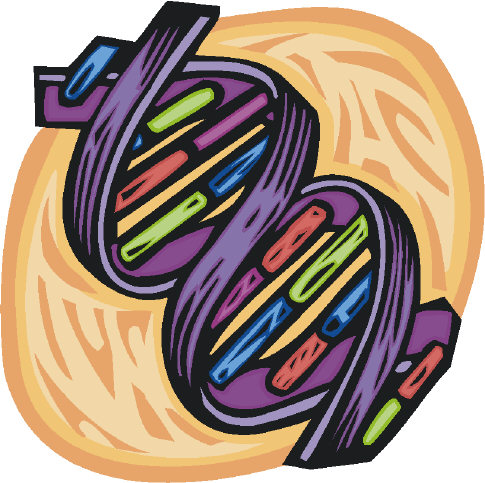
The book is called "The Language of God," referring to DNA, and the author, Francis S. Collins, was the head of the Human Genome Project. He is a renowned and dedicated scientist, and also a man of faith, a believer in God, a Christian. Through the chapters of the book, Collins defines apparent conflicts between the scientific community and the community of faith. He then explains how he has resolved these issues in his own mind. The gist of the book is that serious scientists are seekers of truth through observation and experimentation of the physical universe. Theologians are seekers of truth in spiritual matters. There should be no reason for these two learned groups, both seekers of truth, to be at odds. Rather than try to summarize the arguments made by the author, or even reiterate the issues discussed, I will simply encourage any interested reader to search out this highly enlightening dissertation. I cannot say that I understood the technical aspects of the science, but the book is refreshingly written at a level that a layman such as I was able to enjoy. I leave you with my favorite quote from the concluding chapter of the book.
Thanks for reading and noticing that I'm back.
Like religion & politics, religion & science are often thought to be, by definition, at odds with one another. I think the basic reasons for this stem from the fact that most religious doctrine was codified a thousand years ago or more, while modern science is only about 400 years old. As modern science has developed, it has changed our perceptions of the world around us. This can be threatening when we've believed for generations anything about our world that turns out not to be quite as we've been taught. The eternal nature of religious belief causes us to resist any suggestion of change. So, let me just get to the book.
The book is called "The Language of God," referring to DNA, and the author, Francis S. Collins, was the head of the Human Genome Project. He is a renowned and dedicated scientist, and also a man of faith, a believer in God, a Christian. Through the chapters of the book, Collins defines apparent conflicts between the scientific community and the community of faith. He then explains how he has resolved these issues in his own mind. The gist of the book is that serious scientists are seekers of truth through observation and experimentation of the physical universe. Theologians are seekers of truth in spiritual matters. There should be no reason for these two learned groups, both seekers of truth, to be at odds. Rather than try to summarize the arguments made by the author, or even reiterate the issues discussed, I will simply encourage any interested reader to search out this highly enlightening dissertation. I cannot say that I understood the technical aspects of the science, but the book is refreshingly written at a level that a layman such as I was able to enjoy. I leave you with my favorite quote from the concluding chapter of the book.
"I found it difficult to imagine that there could be a real conflict between scientific truth and spiritual truth. Truth is truth. Truth cannot disprove truth."
Thanks for reading and noticing that I'm back.
Subscribe to:
Comments (Atom)