The Christian church was, of course, born in the days of Roman rule. When the new Christian religion finally became accepted officially by the empire (after a few centuries of alternating tolerance, intolerance and persecution), and as the church evolved toward a structured hierarchy of governance headed by the Bishop of Rome, the emperor was very much involved in church appointments. This continued on through the Middle Ages and the Renaissance, as the church jousted for power with various kingdoms and empires in Europe. Popes appointed kings and emperors, and kings and emperors appointed popes. If temporal and spiritual powers were not one and the same, they were certainly very closely linked. Nothing really changed after the Reformation. Rather it merely created more players in the struggles to affect people's beliefs and behavior. As a prime example of the mixture of power, the king of England was also made the head of the Church of England, and Queen Elizabeth holds that position today. A 17th century group of dissenters called Puritans began to seek relief from an over-dominant English church with a risky voyage across the sea to a faraway land called America, and that is where the story gets really interesting for me.
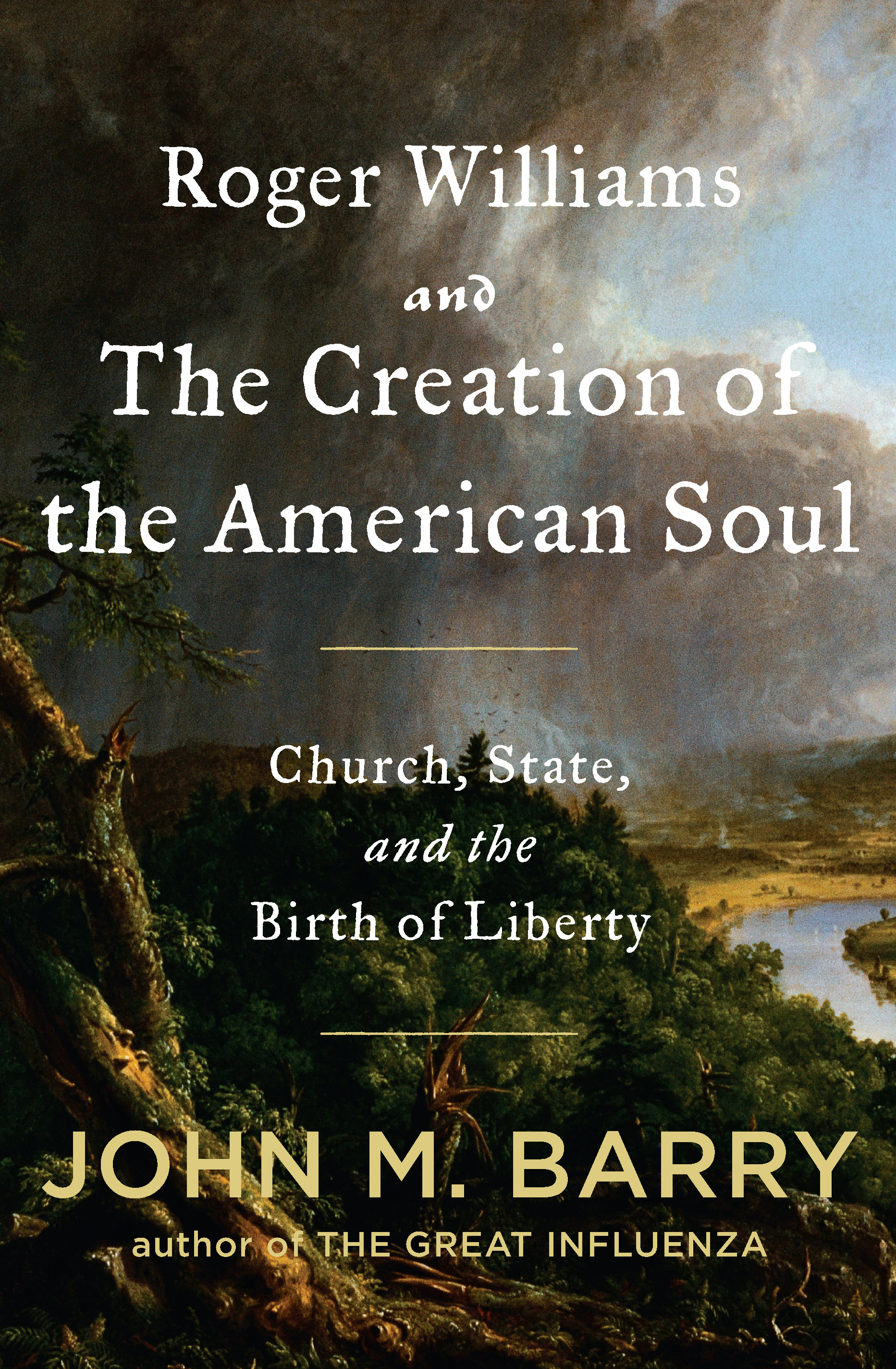
Williams came to Massachusetts colony like the rest, to escape the over-reaching arm of the English church. However, he had had experiences within the English court system that gave him a broader view of what he felt was wrong. While others came to set up their own system of equally-intrusive religious dictates, Williams recognized the need for individuals to be allowed to live and worship as each saw fit, even if such decisions violated accepted practices of the majority. I won't labor you with more detail of the book; alas, you may want to read it yourself. Nonetheless, the point I'm making is that, given the many hundreds of years of struggle between the powers of the church and various heads of states as a historical background, one can more readily understand such a system being established immediately upon Europeans' arrival in this new land, and why it was such an extremely radical idea to suggest religious and temporal powers ought to be completely and legally separate.
So how does this concept play out today? All nice and settled? Hardly. As private citizens of the U.S.A., we can each vote as our individual desires and dreams dictate. However, many of us (as we wish) are members of churches or other religious groups, and as such our thoughts are influenced by our beliefs. When a group of citizens with common beliefs on a specific topic become large enough to exert influence in the political scene, it is sometimes impossible to separate their religious views (the church) from their political votes (the state). Nor should it be necessary to do so. However, no matter how strongly our moral beliefs are held, we need to remember that ours is a secular government, set up that way by our wise forefathers who had seen the abuses caused by the mingling of church and state, and who desired that people of different cultures and faiths should reside peacefully together, bound by a common sense of liberty and the rights of all to pursue their dreams.
This is a much bigger topic than I am able to grasp, but I enjoy contemplating its ramifications in our time. We can all think of current social issues that grate against our moral and religious belief systems. How do we, as citizens of a certain faith, vote on issues that will impact behaviors and lifestyles of others? How far can one group of citizens impose its values upon others, while still supporting the ideals of "liberty and justice for all?"
I have more questions on this topic than answers right now. If you have anything to add, I'd like to hear it. Thanks for reading.
