Monday, February 27, 2012

My Thoughts on Health, Care and Insurance

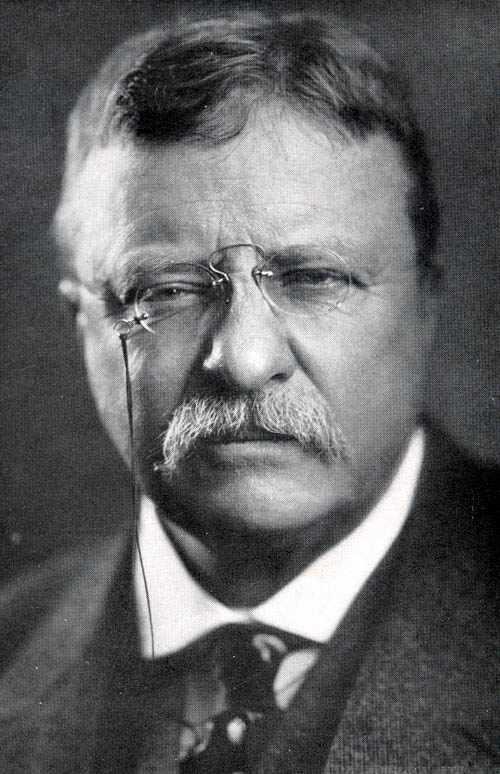
Since Teddy Roosevelt, presidents have called for some form of health reform.  In the earliest days, the cry was for workers to be covered by health insurance from their employers, civil or private.  In the 1950s and 60s, proponents began to seek a larger goal: that of covering all Americans via some form of national health insurance.  Since that generation had just fought a great war against certain "socialist" regimes, opponents of such a plan could easily ensure its defeat by labeling any program "social medicine."  Americans could never accept the "s" word, even though we are quite willing to receive our s.s. checks upon achieving retirement age.

So, now we have a president who promised, and delivered, health care reform that goes a long way toward reaching those millions of previously uninsured Americans with adequate coverage; and we have 4 men wanting to take over his job, all of whom have vowed to repeal said progress if elected.  To me this sounds a lot like "reinventing the wheel."  How can we move forward by destroying what has been built already?

Well, this is, of course, not only a huge issue, it is actually several issues often confused.  My mind is simple, so I'll break the topic of "Health Care Insurance" into the three topics of Health, Health Care, and Health Care Insurance.

Health
It's probably safe to say that everyone wants to be healthy.  However, it's an entirely different story when it comes to taking the necessary steps to be healthy.  Many people are very health conscious and make it a lifestyle to eat well, to exercise regularly and to balance their lives with work, recreation and rest.  They are willing to do what it takes to maintain their best health.  Others know they should do these same things but lack the will to follow through.  Still others are ignorant of how to live healthy, ignore what they do know, or are prevented by physical, environmental or economic realities from living healthy lives.  Finally, there are some who manage to be rather healthy in most respects through no effort of their own; they just have lucky genes or something.  We all know "healthy is good."  So it's always beneficial to promote good health among all via education and marketing, loving coercion and example.  However, this is still a land of individual freedom, and we can't make anyone take the steps necessary to improve or maintain one's health.  This is where government has inconsistently stepped in time and again.  Over the years, congress has determined that we must wear seat belts and motorcycle helmets, our cars must have air bags, crash protection and safety glass, and our homes cannot contain lead or asbestos; all to protect our health whether we want it or not.  So, what am I saying here?  Just that we all know it's a good thing to be healthy.  But to what extent is it our government's responsibility to ensure our health and well-being?  We seem willing to accept government directives over some areas of our lives, whereas others cause an uproar.  It's really just a small step from mandating seat belts and lead-free paint to "Obamacare" for all.  The question is: What do "the people" really want?

Health Care
I consider the scope of health care to include the availability and  affordability, and the right to access, of professional health care.  We are all very thankful for the vast network of hospitals, research labs, clinics, nursing centers and individual professional medical offices all across America.  Every new medicine or advanced technique expands the opportunities to improve our lives.  One of the major issues of our times is the increasing total cost of our nation's medical care.  The crisis we are facing is the confluence of 1) more medical treatments becoming available every year, representing incremental expenses not incurred in the past; 2) an aging population that naturally requires more treatment; and 3) the belief that we have the right to whatever treatments are available.  

Many of us are quite interested in "preventive" healthcare; that is, we are willing to visit the doctor when nothing is wrong just to make sure there isn't a problem brewing unseen.  Others only make that trip when a problem demands it, expecting a quick fix.  Again, this is a matter of personal choice and lifestyle.  Still others wait until matters progress such that an emergency visit and hospitalization are required.  The point is that all this care is good, and it has a cost.  In a free society, that cost is born responsibly by the individual, either directly or by the purchase of insurance protection.  Like other commodities, we buy what each desires or can afford.  However, if we assume an inherent right to our healthcare, we must consider a very different model.

Health Care Insurance
Finally, interwoven throughout the above discussions is the theme of Health Insurance, whether individually chosen and purchased, provided by employers or mandated by legislators.  As a general definition of "insurance," it is an instrument designed for protection against major calamity.  We purchase homeowners insurance against the unlikely and costly fire or storm damage; but we don't expect coverage for our peeling paint or the cracks in our driveway.  Somehow we have come to expect exactly that, however, from our health insurance coverage.  

We want our insurers to pay for every visit to the doctor, the dentist, the optometrist and the pharmacist.  Most of these are routine visits, something we all should be willing and able to pay for, even though it may mean re-budgeting other items in our lives.  Where we really need insurance is for unexpected accidents, hospitalizations and surgeries.  If we realigned our insurance plans to cover those catastrophic costs for which insurance is intended, there should be plenty of money in the system to pay the needed expenses.  Overall costs should come down because we would all be more responsible over those health care costs that each of us should be paying directly. This should be the first step in bringing under control our exuberant health care cost; well maybe it's the second step, after rooting out waste and fraud.


The other area to control costs is a very difficult one to address, so my comments will be limited.  It is just that maybe everyone is not necessarily entitled to every form of health care available.  This gets into moral issues where judgments are difficult to make -- remember the threats of the "Death Panels?"  Maybe, just maybe, I shouldn't expect the latest $500,000 treatment for a condition that has little likelihood of being cured.  Or maybe, just maybe, the wealthy do have a greater right to such treatments, simply because they can afford them.  These are just thoughts, but we should not be afraid to address these points.


Finally, regarding health care reform and so-called (disrespectfully, in my opinion) Obamacare, the whole discussion must begin with one question:  Should the United States, as the most prosperous nation on earth, be expected to provide a certain minimal level of health care coverage to all its citizens?  If the consensus answer is "yes," then the discussion can begin as to how best to accomplish that goal. If the answer be "no," then we leave our less fortunate citizens to fend for themselves. Every president of the 20th and 21st centuries has suggested the right answer should be some degree of "yes." After 100 years, one president made it happen. If the solution or the process wasn't perfect, it should be tweaked, revised and improved by successors. An outright repeal, however, would be an irresponsible, elitist response of "no" by those who are least affected by the question. 

Well, those are my thoughts, but I'm only one.  You are, too, so feel free to share by leaving a comment below.  Thanks for reading, and remember to vote whenever you can. 

Tuesday, February 21, 2012

All God's Children

The Bible says we are made in God's image, and that he makes each one of us uniquely different and special.  I can't explain it any further, but I believe it.  It's just one of those things we must accept by faith because we are human and He is God.  However, having accepted it (and is there any reason not to?), it opens up worlds of possibilities for each of us to grow into who we are meant to be.  Think about it: made in the image of God!  That means we could have all kinds of untapped potential just waiting to be discovered and released.

We don't need to be limited by the expectations of others.  We aren't restricted by our upbringing or our childhood surroundings.  Of course, it doesn't mean we can snap our fingers and make wonderful things happen; rather it's a journey of discovery, a lifelong adventure of finding out just what the Creator has locked up inside each of us.  Each of us is, of course, different - that's what makes us special.  So I can't look at someone else and say, "I want to be just like him."  I may be inspired by him, but I must become my true self by discovering and unlocking God's image within.  And we each need to figure out how to do that for ourselves.

I know that sounds a bit like a sermon at church; that's OK.  I am a reverend, after all.  But, once again, I was just using my Blog title as a springboard for my thoughts.  I am an individual, uniquely formed by my Creator with qualities shared by many others but combined in a special, patented formulation that makes me me.  That's all I was trying to say.  Some of us grow up and discover these things sooner than others; I am 60 years old and still trying to figure it out!  So what's so special about you?  Plenty!  And you're not the same as I.


Share your thoughts, and thanks for reading.

Friday, February 17, 2012

Final Cup of Tea

In my previous post, I began to address 10 core beliefs of the Tea Party as presented in a certain website I found.  I covered the first five last time, saving the rest for this post, as I don't want my writings to become too lengthy.  As it turns out, the remaining beliefs of the Tea Party don't draw much commentary from me.  They seem to be minor points, perhaps added just to bring the list up to 10 items.  I do, however, have another point to address later, that relates to one my prior discussions, so make sure you don't miss that.

I hope this will be my last post on the Tea Party, at least for a while.  I think you perceive I'm not a fan.

Core beliefs of the Tea Party (cont'd from previous post):

6. Promote Civic Responsibility
As a grass roots organization, I can certainly see this as a basic tenet of the Tea Party.  However, it's not really a political topic.  Everyone, at least theoretically, would want to encourage civic responsibility and action.

7. Reduce the Overall Size of Government
I can only agree with this statement if it is actually shown that government is too big.  That may sound absurd, but it's too easy to be cynical and simply state that government should be reduced in size because of some ideology.  By what standard ought a government to be measured?  How will one know if it is "too big?"  Once it is reduced by any amount, will the ideologists still cry for reduced government?  I'm just saying, "Prove your case and know exactly what you are calling for."


That being said, I am sure (though I cannot prove my case) that there are vast areas, agencies, bureaus, offices, departments and functions within every level of government, especially federal, that have long outlived the purposes for which they were formed and ought to be eliminated.  In like manner, there are certainly items in the federal budget that were created for some good purpose long since forgotten and obsolete.  


8. Believe in the People
This is just a general, capitalist call to let the people figure things out for themselves rather than expect government to take care of us.


9. Avoid the Pitfalls of Politics
OK, this one is simply a call to Tea Party adherents themselves to tread through the world of U.S. politics without falling into the standard traps. It may be one of their core beliefs, but it isn't a political issue, per se.


10. Maintain Local Independence
As a grass roots group, local governance is important to these folks.  Is this a position against national parties?  I don't know and I don't have much to say here, as, once again, this really isn't a political issue, just a statement of how this group wants to be organized.


Basically, I didn't find much to disagree with in the party's 10 Core Beliefs.  However, in practice the group has consistently taken political positions on specific issues, not addressed in this list, toward the far right end of the spectrum, so as to not necessarily represent the majority of Americans.  And that brings me back to where I started this discussion with groups who claim to speak for us all.


And speaking of the majority of Americans, back a few posts I suggested that the American electorate probably looks much more like a normal bell curve distribution than the polarized population we read about.  I just came across a CNN article making the same claim.  The main point being made in this article is that the more Mitt Romney has to move to the right in order to secure the conservative faction's primary votes, the more he begins to lose the independent voters for the general election.  That is important because most voters are in the middle of the distribution (as I said,) while the GOP is being driven by the few at the far right.  Read this article here.

This exposes one of the flaws (and there are many) in our primary voting system.  Candidates must appeal first to one segment of the electorate (one's party).  Then the winning nominee must do one's best to appeal to all voters, perhaps requiring a different set of arguments and promises.


This situation exposes another flaw, and that is simply our two-party system.  As long as we have two major political parties, they will be driven to the extremes of the political spectrum so as to be as differentiated from one another as possible.  Each party must appear to be greatly different from the other; otherwise voters wouldn't care which party reigned.  This is what drives their abhorrence of appearing to be in agreement on any topic, and so stalemate occurs with regularity.  No wonder Americans are fed up with both parties: most of us are neither far to the left nor far to the right.  


On a slightly related topic, I have a book on order from our library that goes into the history of our cherished notion of "separation of church and state."  I look forward to reading it, and I'm sure it will be the topic of a future post.


As always, thanks for reading.  I believe I've had enough tea for a while, thank you.


Monday, February 13, 2012

Tea for one; Tea for too

OK, that's a silly heading for this post, but I'm obsessed with trying to tie each entry into the title of my Blog somehow.

This is the second edition of my discussion of the Tea Party and its 10 Core Beliefs as found on this web site.  Here I will begin to address the list and comment on each point.  Again, remember there is no national Tea Party platform or cohesive organization, just loosely connected local grassroots Tea Party groups with similar beliefs and values.  So the list I am referencing does not necessarily represent the views of all Tea Party followers.  One other note - each item in their list is followed by an explanatory paragraph.  However, in this post I will only reprint the heading of each core belief.  The ensuing comments are my own.  Here goes . . .

1.  Eliminate Excessive Taxes
A more sensible goal would be to "Reform the Tax Code," eliminating all credits, shelters and exclusions.  For income, establish a reasonable, graduated tax schedule, and then LEAVE IT ALONE.  But, yes, many other taxes ought to be eliminated.  This is a huge topic that will probably reappear in a later post.


2.  Eliminate the National Debt
A lofty goal, but it's not necessary to eliminate our debt completely.  We certainly don't want to go so far as to prohibit our government from borrowing when necessary.  It would be a giant leap to just begin paying it down.  Again, a better plank in the platform would be to "Substantially Reduce the National Debt," and STOP ADDING TO IT.


3.  Eliminate Deficit Spending
In the short term, I agree with this principle, as this is the only way to begin to reduce our overall debt.  However, one should not go so far as to prohibit the government from deficit spending during a true crisis.  I think this item is the same as "Balance the Budget."


4.  Protect Free Markets
This item addresses the degree to which the government should interfere with and regulate commerce and business in the U.S.  Of course, the Tea Party is all for minimal government interference in the marketplace, and I tend to agree with their position.  We do, however, expect responsible oversight of most industries, so there needs to be a reasonable balance between regulation and laissez-faire.


5.  Abide by the Constitution of the United States
I'm going to ruffle many feathers on this one, I fear.  The U.S. Constitution was a daring stroke of genius when the founders wrote it, and it's been a model for the world's democracies for two centuries.  However, it is an 18th century document, written for the needs of another age and of a young, agrarian and frontier nation.  It's been amended 27 times to address issues the fathers could not have anticipated.  I recently read an article stating that new democracies of the world today no longer look to our constitution as a guide - there are more relevant models available.  Thomas Jefferson believed from the outset that a Constitutional Convention should be held every 20 years so that each generation could rewrite the law to suit their particular needs.  Yes, I agree with the premise above, that we should all "abide by the constitution."  But that document should be rewritten for the 21st century America.  It's not a sacred text.  When written, those first three treasured words, We the People . . , were assumed to mean white, anglo-saxon, christian, protestant, male property owners; such was the mindset of the time.  


Here in Michigan, we recently voted down an opportunity to rewrite our state constitution.  We only have this opportunity every 18 years, and the last rewrite was done in the early 1960s, 50 years ago.  The only argument I heard against holding a constitutional convention was that it would cost too much.  It seems a modern set of laws, tailored to a 21st century economy would repay that cost quickly, in eliminated waste and excess expenses.


Well, it felt good to get that off my chest.  Those are my opinions - feel free to agree or disagree.  What are your thoughts?  Do you have a taste for tea?  Thanks for taking time to read my humble posts.  Next time I'll address points 6 - 10.


Thursday, February 9, 2012

A Taste for Tea?

Well, here I go.  I said this Blog was to be a discussion board of sorts, so I'm going to dare to delve into the sinister and murky world of U.S. politics, where every word seems to have double meaning and all motives must be questioned, while every voice claims to represent all the rest of us by virtue of being loud. 

Talking about claiming to represent all Americans, I bet you've heard of the Tea Party, those grass-roots folks who live in every small town of America, who drive Chevy's and Fords, go to church and own several U.S. flags, whose favorite colors are red, white & blue, who have personally met the founding fathers, have all memorized the constitution and yes, claim to speak for the rest of us.


Now before I go further, let me just say that I have long hoped for a third, independent party to arise in America.  I would have called it "The American Party," and it would seek to truly bring about a reconciliation between the right and the left.  This party would not require anyone to abandon one's current party affiliation, but would ask adherents to be dedicated to the ideals of compromise, dialogue and good-faith negotiating to move America forward.
An example of a "normal" bell curve
This ideal is based on the assumption that America is not as politically polarized as the press (and the two parties) would have us believe.  Rather, I believe the political inclinations of all Americans would appear as a normal bell curve with the great majority of us holding a pretty centrist position on most issues.  When we have an election that results in something close to a 50-50 vote, the TV voices love to shout about how divided we are as a nation.  That's not true!  Most of us are just a few degrees either side of center and could easily cross over that line at any time.  This is why we put one party in office one year and switch to the other party the next election.  We are much more united than the loud voices would have us believe.


That brings me back to the Tea Party, which claims to not be a party and isn't in the formal sense.  Actually, they claim to be an "all-inclusive American grassroots movement," according to one website I found.  I wanted to learn just what the TP stands for, and I discovered there really is no single set platform, no single leader, no real national organization.  It is a collection of local groups, loosely organized under one name, each pursuing what it's followers want to see changed in the American political scene.  I did, however, locate one website that clearly listed 10 core beliefs for the Tea Party Movement. So I am using that site to develop my understanding of the TP phenomenon, realizing that it may only be the actual tenet of one group, or even a single individual.  But at least it's well organized and seems like a good place to start.  The site is located here.  The site is peppered with quotes from founding fathers and other American heroes, or with anything that supports the point being made.  I'd like to copy one of them, though, which I had never heard before but is poignant and relevant for our age.  


“If there must be trouble, let it be in my day, that my child may have peace.” --Thomas Paine, 1776


Mr. Paine, of course, spoke those words in anticipation of revolution.  The TP site uses these words in reference to the crushing national debt accumulated by our generation's overspending, which will be left for our children to settle unless we have the will to do something about it now.  I like the quote in any context, and I agree with the application in the Tea Party site.


Now, the problem with the Tea Party as I see it is that, though they claim to be "all-inclusive," they have not so positioned themselves by their views.  In the bell curve example above, most Tea Party followers would be in the green or blue sections on the right, a long way from the majority of Americans.  So, rather than bringing together both major parties, they have camped out on the far fringes of one party, causing plenty of friction within that party, and in almost total opposition to the other.


Well, I had hoped to actually address some of the 10 core beliefs, most of which I basically agree with.  However, that may have to wait for another posting, as I don't want to force readers to endure too many lengthy tirades from me.  So, for now I'll just say, "Thanks for reading."  Feel free to post your own thoughts on the TP, and also feel free to forward this on to anyone you think might be interested in reading or commenting.


Tuesday, February 7, 2012

When in Rome . . .

This is going to be a sillier post than most, but it does have to do with my Blog title once again.  As I'm writing this it's Super Bowl Sunday, and I'm waiting for the big game to start in about, oh . . .  5 hours.  In other words, I have nothing better to do on this beautiful, sunny, 43-degree Sunday afternoon in Michigan.  I think this year's game is Super Bowl 46, or should I say XLVI, which gets me back to Rome.  What's up with the continued use of roman numerals?  I remember when the game was played at Detroit's Ford Field - it was Super Bowl XL and I kept thinking it meant extra large, like yeah, it's a really Big game.  When I was a kid, I started playing a little game at the end of a movie.  When the credits were scrolling I looked for the copyright year and tried to figure it out before it scrolled out of sight.  Imagine you have about 3 seconds to decipher MCMLXVI.  Could you do it?  Why do they do this?  What's the point?  Are they trying to hide something?  That one was 1966, by the way.  I continued to do this into adulthood, just to keep this useless skill sharp.  I remember when I first saw a film made in the current millennium.  It looked so weird I almost missed it - just a simple MM. 


There's a good joke about the Roman soldier ordering 5 beers in a bar by holding up 2 fingers in the form of V.  It's the only Roman joke I know.


Fortunately, the Romans no longer use their own numerals in everyday commerce.  I was in Rome in 1974, in the pre-euro days when the Italian lira exchanged at several thousands to the dollar.  Can you imagine seeing a souvenir priced at 750,000 lira written the Roman way?  If you can figure that one out, let me know.  Here's one for you engineers out there.  What kind of math do you need to build aqueducts, obelisks, temples, columns, arches and roads, and how did they perform that math?

Is there an App out there for you smartphone users to convert Roman numerals?  If not, you might create one and I'd like XV per C of the profits, please, for the idea.  That brings up another question someone might be able to answer for me, though I doubt I'd understand your explanation: How do they program computers for Chinese characters?  How do they even print a keyboard - aren't there really a lot of those characters needed?  But that's really a different topic.

I must admit Roman letters do look really cool on government buildings and monuments.  They look so official and eternal.  It slows me down, though, because I'm the guy who always has to stop and figure out the date, but maybe that's a good thing.  It makes me spend a little more time looking at something that is probably worth looking at, smelling the roses so to speak.  You know, I just realized that if I read this post out loud, I'd sound just like Andy Rooney, and that pretty much scares me into signing off.

So, I promised that this post was tied to the title of my page, and perhaps you've figured it out.  It should be easy to see by now: I = 1.

If you know any other Roman jokes, please post them here.  Also, I encourage any discussion on the topic of Roman numerals.  Do they annoy you?  Do you like them?  Do you have any interesting stories about your own experiences in the Roman numerical world?

Thanks for reading.

Sunday, February 5, 2012

Precision in language

So, the title of my blog has to do with grammar - that's right, the "proper" use of the English language.  I learned most of my grammar from my 8th grade English teacher, Mr. Kuick; he drilled it into us.  I can't say I'm necessarily an expert at grammar, as my probable misuse of the semi-colon just proved, but I did earn the highest marks in Mr. K's class 5 out of 6 marking periods that year.  More on topic, my major pet peeve is the use of the plural pronoun "they" as though it were a singular pronoun.  It's one of those mistakes we've heard so often that it sounds correct to us.  I understand the current PC reluctance to use the gender-specific nouns "he" or "she" when referring to an unknown person, but way back when I was in school, we were taught the rule that "when gender is unknown, it is proper to use the masculine form."

The current proliferation of this abominable misuse of English pronouns seems to have sprung out of the heightened awareness of feminism during the 1970s.  English-speaking people everywhere looked for ways to get around the rules we all learned, so as not to offend the ladies among us, by concocting terms such as "he/she" or "(s)he", which became as cumbersome as constantly using "he or she" in place of the dreaded, albeit proper and simple, "he".  Admittedly these efforts looked awkward in print, and sounded even worse in speech.  Thus, for fear of offending a few feminists, we all have had to suffer the outrageous sounds of pronouns not agreeing in number with their antecedents - quite like the universally hated screech of fingernails on chalkboard.


I realize this problem of language is not new, and, really, who am I to complain?  After all, a certain W. Shakespeare even used, or misused, it, or so I am told.  Who can argue with the great one?  I have even seen this mistaken use of "they" in a Biblical context.  Although I must assume it was a modern version of the text, put there by a translator who never sat in Mr. Kuick's class.


I know I won't change the world.  I also understand that a language is not created by a set of grammar rules; rather the rules are laid out to define a language as it is spoken by a group of people at a given time.  That's part of the beauty of language - it is fluid, always evolving to meet the ever-changing needs of the people who speak it.  In other words, "the horse pulls the cart," not the other way around.  Nevertheless, I must express my disappointment at the less-than-perfect solution we as English speakers have settled upon.


When confronted with the dilemma of finding a substitute pronoun to be used in place of "he" or "she" to refer to someone whose gender, and I assume identity, is unknown to the speaker or writer, why in the English-speaking world would we decide that "we'll just refer to a whole bunch of people so no one will be offended by being mislabeled?"  Why indeed?  Especially when we already have a perfectly suitable pronoun that should satisfy everyone - one that suffers from disuse but has been designed to fill this void when we want to speak of one another in a gender-neutral way.  Of course, this pronoun is "one," along with its variant forms: one's, oneself, anyone, someone, everyone.


Yes, I know what you're thinking: "It sounds so awkwardly British, so proper and all that rubbish."  But just think about it a while, in fact give it a try.  If a person would just listen to one's own speech, one might begin to hear that what one says doesn't always make complete sense, grammatically speaking.  Now read that last sentence using the plural pronouns "they" and "their" in place of the underlined ones.  I do hope you're offended by what you hear!


Of course, I've written most of this rather "tongue-in-cheek," as I don't anticipate a great change in the linguistic tide.  But now do you see it in my title?  I am not a sloppy, innocuous "they;" I am a uniquely important and meaningful "one", and so are you!


I welcome your comments on this topic.  Indeed, that's the purpose of this Blog: to generate discussion on various topics from writers with different views and opinions so we all can be enriched, one post at a time.

Thanks for reading.

Saturday, February 4, 2012

Posted and published

Well, here I am - on the web.  This is my first adventure into the area of web-based social media beyond email.  I have no Facebook page or Twitter account, and I barely use the texting feature on my cell phone.  So, why am I here?  I follow a couple of Blogs that I've been introduced to, and I've found they can be a fun way to keep up with what one is doing.  This Blog will be a little different in that I intend to share not only my activities but my thoughts on a variety of topics, inviting feedback and input from anyone who cares to comment.  

My thoughts aren't radical or revolutionary, and my objective is not to dissuade anyone from one's own views.  I simply find that I often have definite ideas that I'd like to bounce off anyone who's listening.  I'm always willing to be convinced to change my opinions, and that takes honest and polite dialogue.  The funny thing is that I'm not a talker; that is, I've never been very sociable nor a conversationalist - I'm quite the silent type actually.  Part of that is the basis for this blog - I often don't speak out because I respect the thoughts and opinions of others, and I'm not interested in changing their views.  However, I would like to express my own ideas, just in case they are found to be valid and worthy of consideration. 

Before this first post becomes too long for anyone to be willing to read it, let me just address the title I have chosen: "I am one; you are, too".  I will try to tie many of my postings into this title, as it can be read with many levels of understanding.  But it really has to do with one of my major pet peeves, and that will be the subject of my next post.  I hope you're intrigued, and thanks for reading.